

Learning Landscapes
Learning with the living world

What changes when we learn from a place instead of only learning about it?
Learning Landscapes brings together environmental education, embodied experience and cultural exploration. Through walks, encounters with animals, outdoor learning and creative practices, we create opportunities to experience the living landscape as a place of knowledge, relationship and discovery.
We work with the idea that ecological understanding does not come only from books or classrooms. It also grows through observation, movement, listening, touch, curiosity and spending time in a place.
A landscape is not simply a backdrop. It is a living network of relationships between plants, animals, water, soil, people and history. Learning to recognise these relationships can change how we understand our surroundings and our own place within them.
Walk the Goats
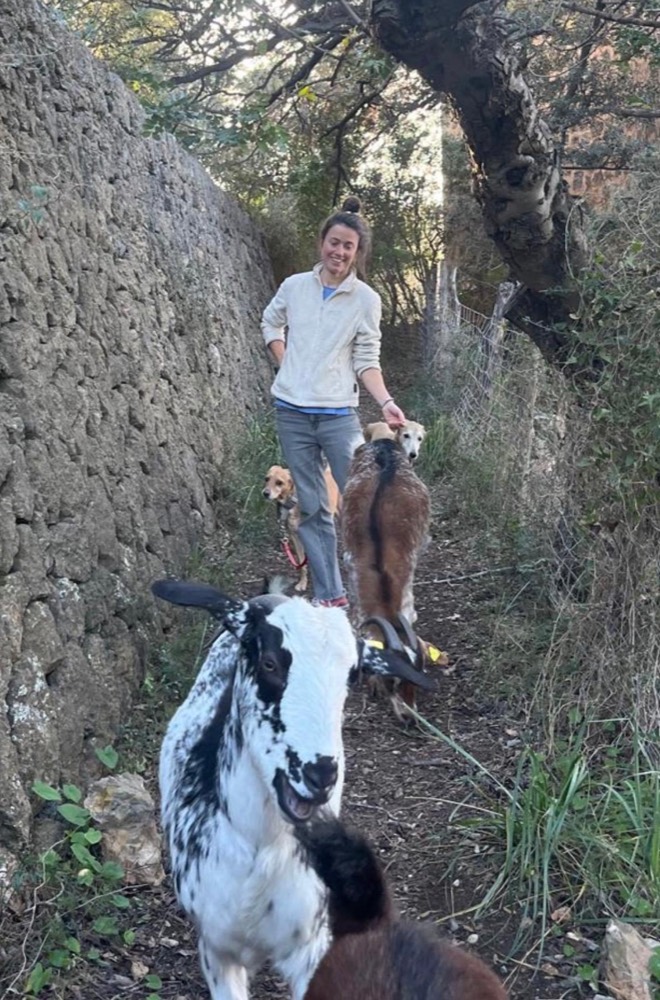
Our goat walks offer an opportunity to discover the landscape alongside the herd.
Walking with goats invites us to slow down and pay attention. What plants do they choose to eat? How do they move through different habitats? What can their behaviour teach us about vegetation, grazing and the ecological processes shaping a landscape?
These encounters connect animal behaviour, traditional pastoral knowledge, biodiversity and landscape management. Rather than simply observing animals from a distance, we explore what becomes visible when we spend time with them and follow their rhythms.
The walks are an invitation to experience the territory differently: through curiosity, attention and a closer relationship with the living world.
School outings and environmental education
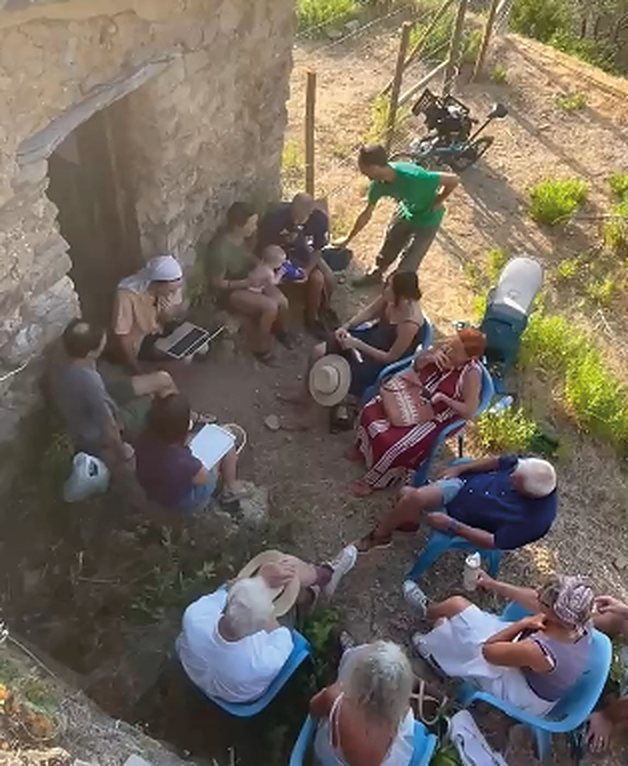
We develop outdoor learning experiences for schools and educational groups, adapted to different ages and interests.
Activities can explore biodiversity, Mediterranean ecosystems, agroecology, food production, soil, water, grazing animals and the relationships between human activities and ecological processes.
Through observation, games, practical tasks and shared exploration, students can connect scientific concepts with their immediate surroundings. The aim is to encourage curiosity, ecological understanding and a sense of responsibility for the places we inhabit.
We believe environmental education is most meaningful when it combines knowledge with direct experience and creates space for questions rather than simply delivering answers.
Unlearning Dualisms
How we relate to the natural world is not only an intellectual question. It is also something we experience through our bodies, senses and emotions.
Through practices such as yoga, meditation, sensory exploration and creative encounters with the landscape, we explore different ways of paying attention to ourselves and our surroundings.
These activities create space to slow down, reconnect with the body and experience our relationship with nature beyond the idea of the environment as something separate from us.
We are interested in the connections between ecological awareness, embodied experience, cultural practices and collective wellbeing.
How to participate
- Join a goat walk. Walk with the herd, discover local vegetation and explore the landscape through the rhythms and behaviour of the animals.
- Bring your school or group. We develop educational outings adapted to the age, interests and learning objectives of each group.
- Organise a collective experience. We welcome collaborations with educators, artists, researchers and other practitioners interested in exploring the connections between nature, body and culture.
- Share a practice or idea. If you have a way of learning from, moving through or connecting with the landscape that you would like to explore with others, we would love to hear from you.
Learning Landscapes is an invitation to discover that learning can happen anywhere, and that the living world has much to teach us when we make time to listen.
Explore our activities Organise a school outing Propose a collaboration