

Guerrilla Grazing
Bringing grazing animals back into the landscape
Read the article: Grazing for Resilient Landscapes →
Why are we bringing back grazing animals to help us restore and care for the landscape?
Across Mallorca, many areas of agricultural and pastoral land have been abandoned or are no longer actively managed. As traditional grazing practices disappear, vegetation can accumulate, habitats can change and some landscapes become increasingly vulnerable to wildfires. At the same time, the ecological knowledge associated with extensive livestock farming risks being lost.
The Guerrilla Grazing project explores how small-scale, mobile herds can help restore relationships between animals, vegetation, people and territory.
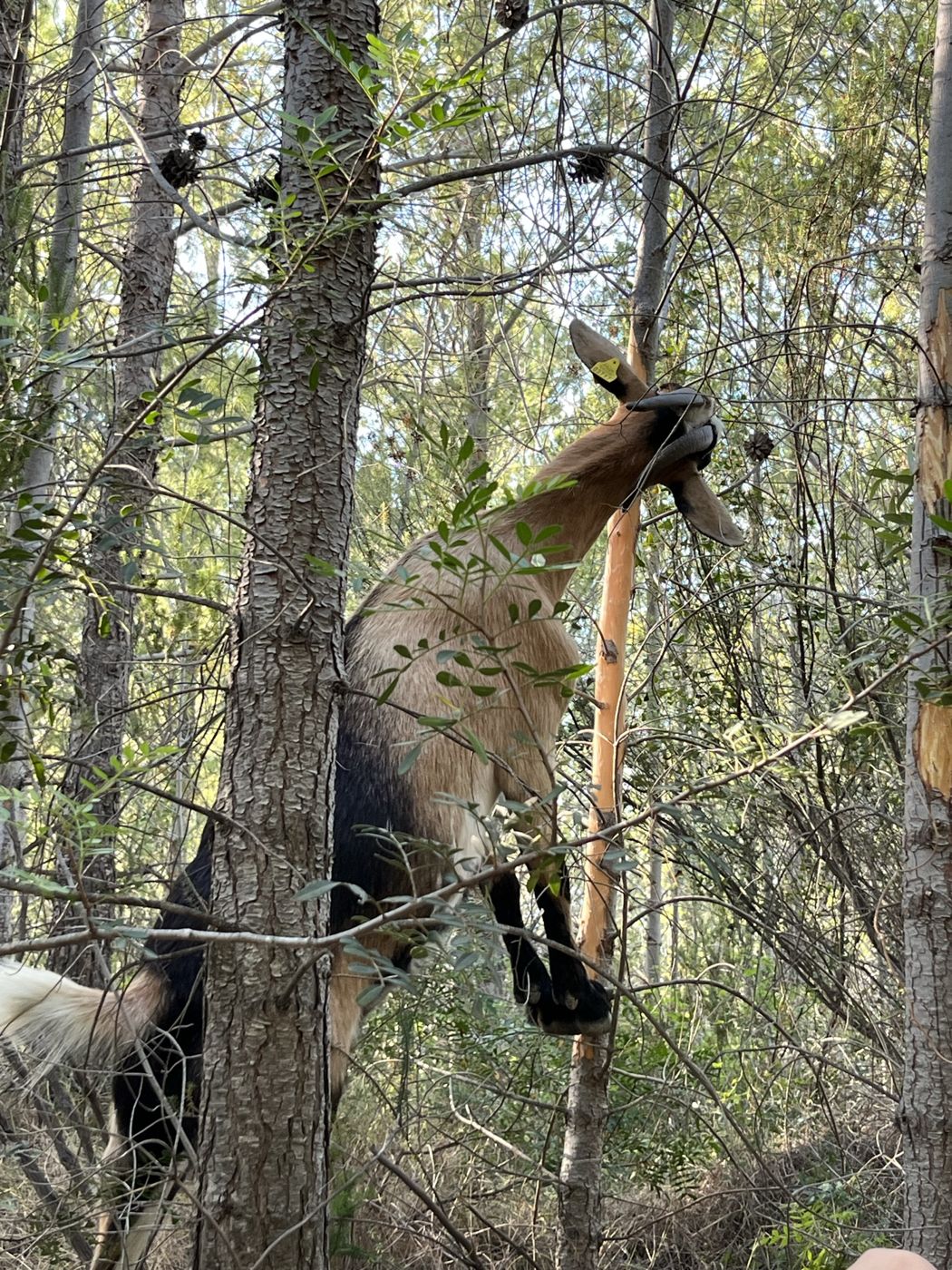
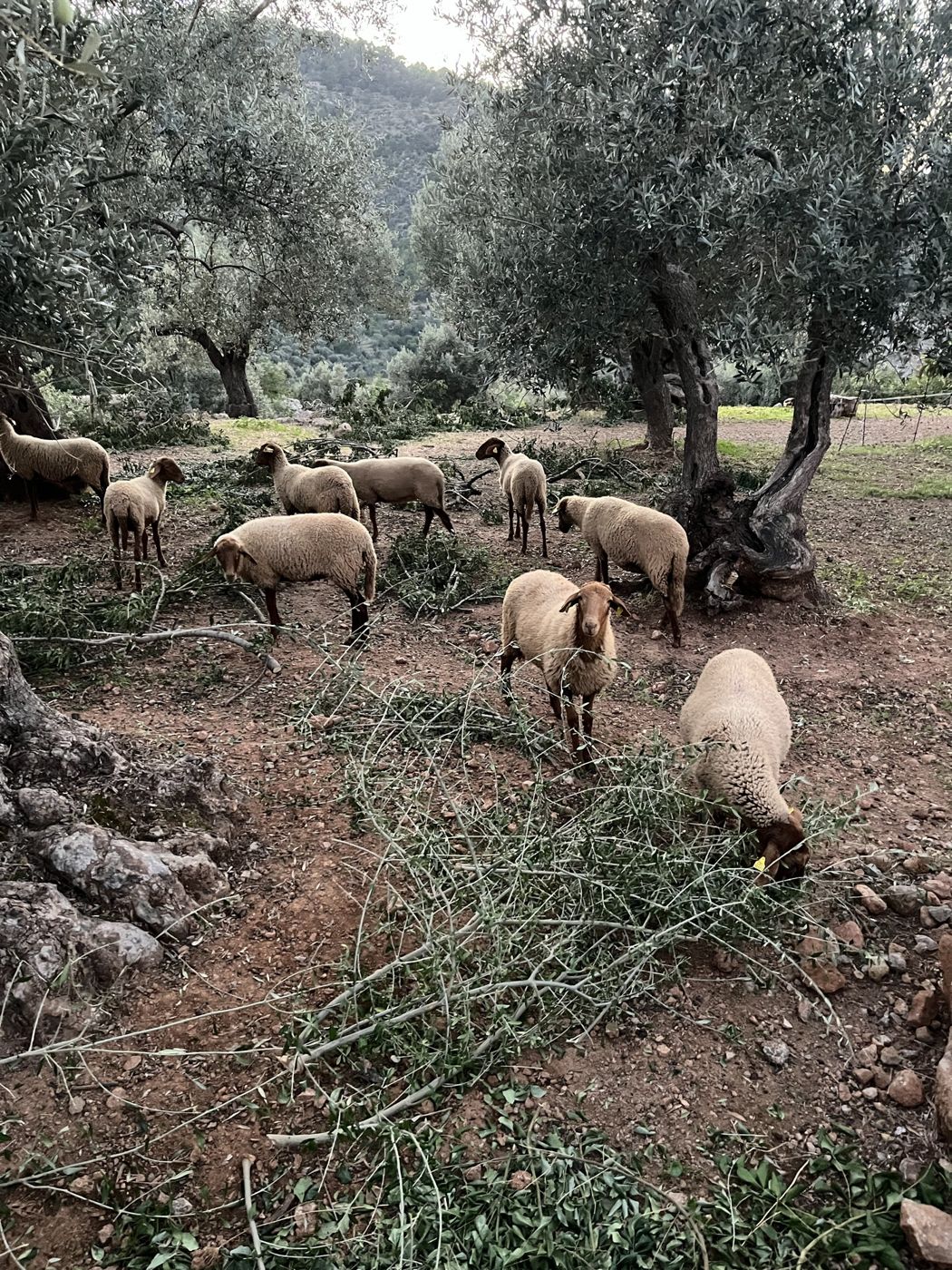
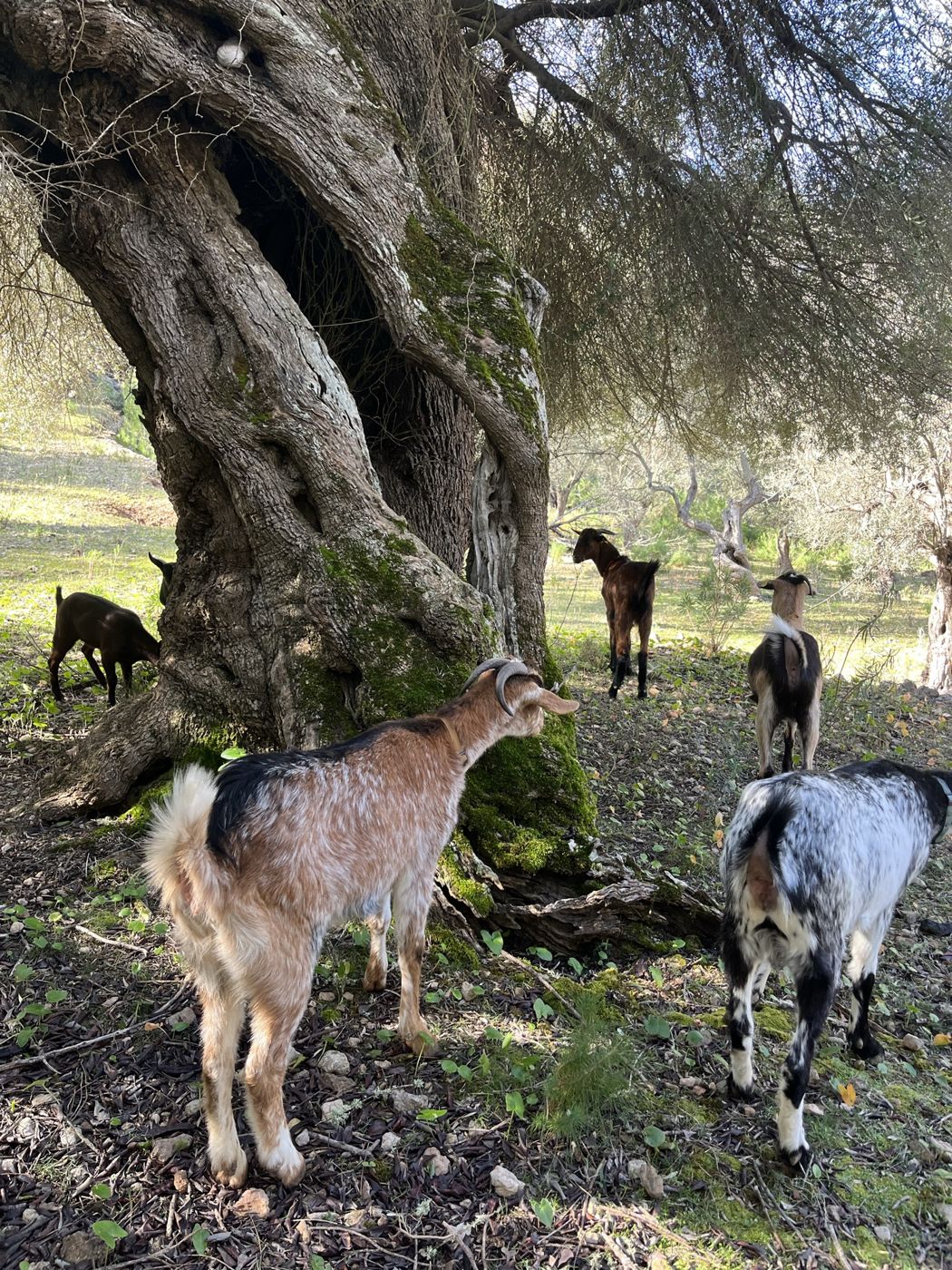
Through our local goat and sheep herds, we bring grazing back to places where it can contribute to landscape management, biodiversity and fire prevention. Rather than treating animals simply as a source of food or a tool for clearing vegetation, we work with their behaviour and ecological role as part of a living system.
Grazing as ecological management
Grazing affects much more than the plants an animal eats. It can influence vegetation structure, create different habitat conditions, redistribute nutrients and shape the relationship between open areas, shrubs and woodland.
These effects depend on the landscape, the animals, the season, grazing intensity and the time allowed for vegetation to recover. This is why we work towards planned, rotational grazing rather than continuous, uncontrolled grazing.
By moving the animals strategically between different areas and adapting grazing to the conditions of each site, we aim to support landscape regeneration while reducing the accumulation of combustible vegetation in selected areas. NoFence virtual fencing collars allow us to include large, unfenced areas in our grazing system and to plan and monitor herd rotation flexibly.
Our work connects fire prevention with biodiversity, soil health, agroecology and the continuation of local pastoral knowledge. Each landscape requires a different approach, and grazing is one part of a wider process of ecological care.
Working with landowners and local communities
Guerrilla Grazing depends on collaboration. Landowners, farmers, neighbours, technicians and local organisations all have a role to play in making grazing possible.
Through agreements with landowners and ongoing landscape management, we work to identify suitable areas, plan grazing rotations and establish the infrastructure and responsibilities needed to care for the land and the animals.
Our ambition is to make regenerative grazing more accessible, including on land that would otherwise remain unmanaged because the resources needed for active stewardship are unavailable.
How to support the herd and the landscape
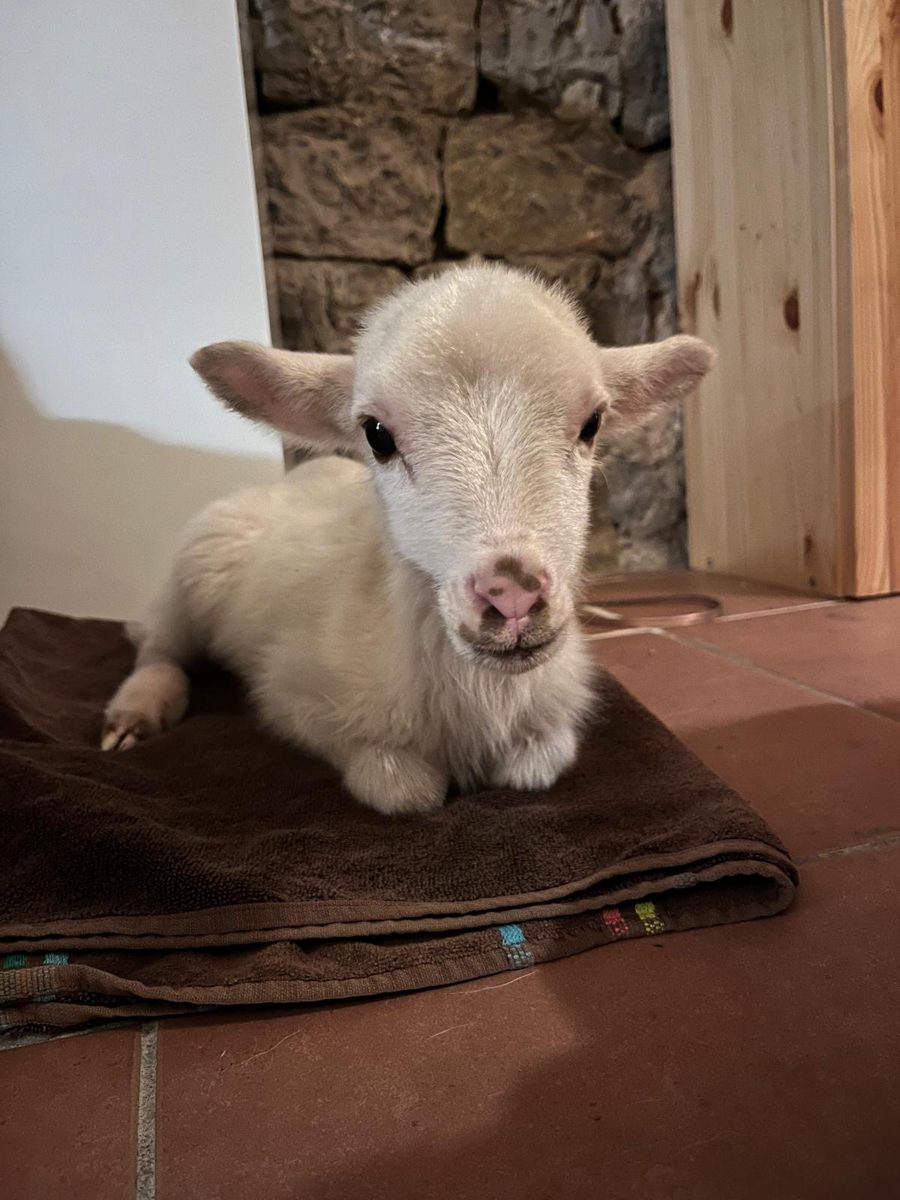
- Adopt a goat. Contribute towards the annual costs of feeding, veterinary care and daily animal welfare. Your support helps us maintain the herd and continue our landscape management work. Depending on the arrangements, supporters can receive updates, photographs and opportunities to meet the animals.
- Sponsor a hectare. Help finance the planning and implementation of regenerative grazing on a specific area of land. Your contribution supports the practical work needed to manage vegetation, move the herd and monitor the landscape.
- Bring your land into the project. If you own or manage land that could benefit from grazing, we can explore a stewardship agreement and assess whether rotational grazing is appropriate.
- Contribute resources or expertise. Infrastructure, equipment, technical knowledge and financial contributions all help make grazing possible.
- Join a learning activity. Discover the relationships between animals, vegetation, biodiversity and fire prevention through selected walks and educational activities.
Every contribution helps connect animal welfare with the long-term care of the landscape.
Adopt an animal Sponsor a hectare Explore a stewardship agreement